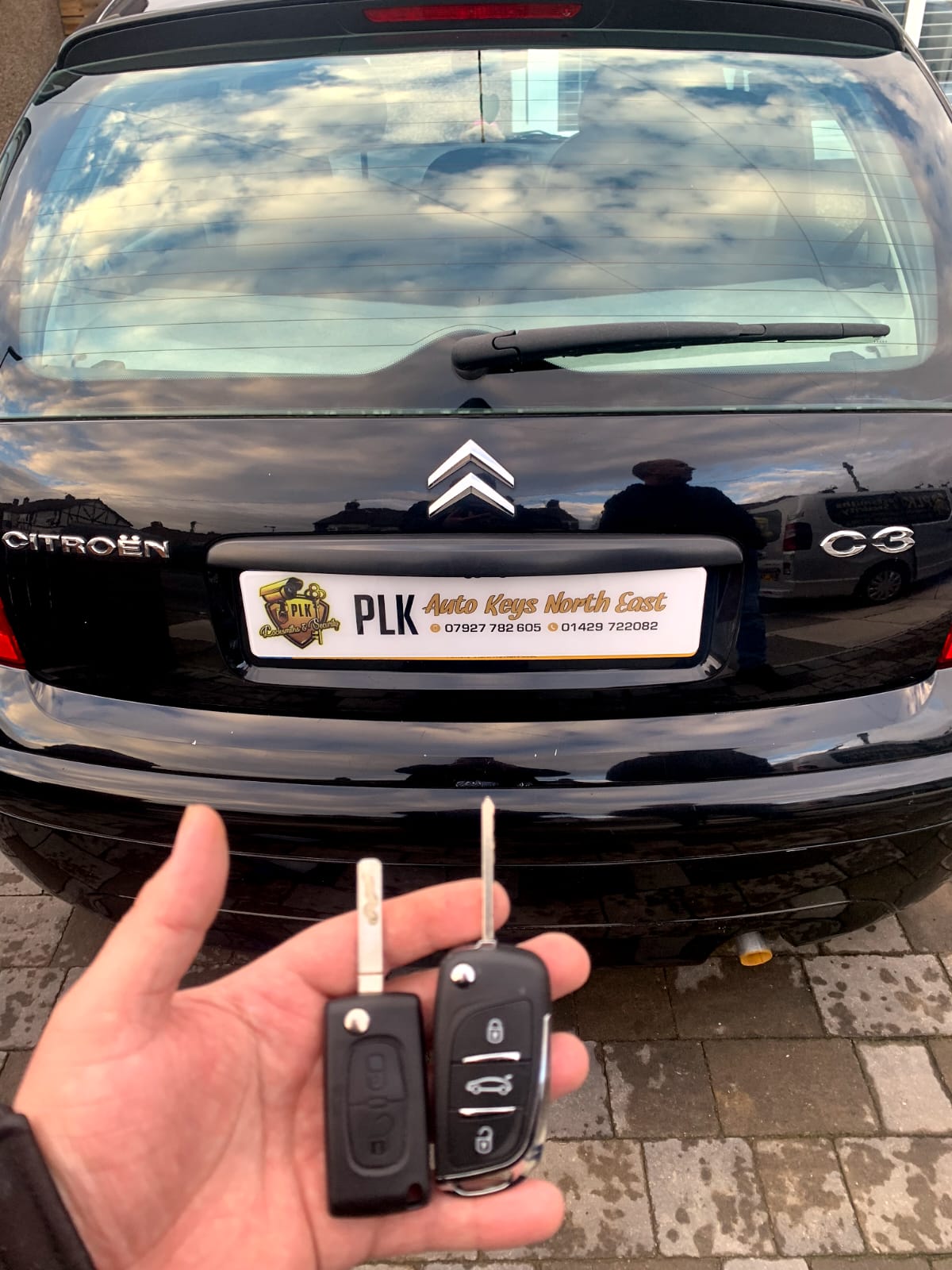
1. The blade needs jiggling or only turns at one angle
A mechanical key should operate the lock smoothly. If you increasingly need to wiggle it, push harder or find one exact angle, the blade may be worn. The lock itself can also wear, so compare with a less-used spare if you have one.
Do not keep forcing a bent or thin blade. If it snaps inside an ignition or door lock, the repair becomes more complicated. A replacement blade or complete key is usually easier to arrange while the original still works well enough to identify and test.
If both keys have the same difficulty, the lock or ignition deserves inspection rather than creating two copies of the same problem.
2. The plastic case is cracked or the blade is loose
A cracked case is not only cosmetic. The case holds the circuit board, transponder and battery in the correct position. A loose blade hinge on a flip key can worsen until the blade separates completely, while missing rubber buttons can allow moisture and dirt onto the electronics.
Sometimes the electronic board can be transferred into a correct new shell. That can be cost-effective when the electronics and transponder are healthy. But incorrect shells can pinch components, move the transponder or leave the emergency blade poorly supported.
If the case is opening on its own or has already been taped together, repair it before daily use turns a cheap housing problem into a damaged circuit board.
3. Remote buttons work only sometimes
Intermittent buttons can start with a weak battery, worn button pad, damaged microswitch or cracked solder joint. Replace the battery with the correct type first if the manufacturer procedure is straightforward. If only one button fails while others work, internal button wear becomes more likely.
Repeatedly pressing harder does not repair a microswitch. It can make board damage worse. If the car still starts normally, the immobiliser side may be healthy even though the remote is deteriorating.
That is a good time to repair or replace the key because you still have reliable vehicle access and can compare the replacement with a working authorised key.
4. The vehicle intermittently says “key not detected”
Intermittent smart-key detection can be a fob problem, especially if changing the correct key battery helps. But it can also involve vehicle antennas, low vehicle voltage or the smart-key system itself.
Use the spare key as a comparison. If one key is consistently recognised and the other is not, the first key deserves attention. If both keys fail in the same places or conditions, replacing both without diagnosis is unlikely to be a sensible first step.
For supported faults, AutoKeyChase offers Immobiliser Diagnostics so a vehicle-side problem is not mistaken for two bad keys.
5. The key has been wet or physically damaged
Remote and smart keys contain electronics that do not always survive water, impact or being crushed. A key that has been through a washing machine or dropped hard may continue working for a while before corrosion or cracked joints create intermittent faults.
Remove the battery if appropriate and do not keep repeatedly operating a visibly wet key. The right response depends on key design; some boards can be assessed or repaired while others are better replaced.
If you have a second working key, use it while the damaged one is inspected. Continuing to rely on a water-damaged only key is a common route to an avoidable all-keys-lost emergency.
6. The transponder key opens the door but will not start the car
A mechanical blade can operate the lock while the immobiliser refuses to authorise starting. That can happen if the transponder is missing, damaged or no longer recognised. It can also happen because of a vehicle-side immobiliser fault.
Again, the spare key is the best comparison. If the spare starts the car immediately, the first key is a stronger suspect. If neither starts, diagnosis should look beyond the key.
AutoKeyChase’s Car Key Programming service covers supported transponder and smart-key work, while the diagnostic service is more appropriate when the vehicle may be at fault.
7. You have only one ageing key left
Even if the key still works, having one old key creates risk. If it is lost or fails, the next job becomes an all-keys-lost recovery rather than a planned spare. That can mean entry, more complicated cutting/programming and greater disruption.
A second key also provides diagnostic value. When a remote or immobiliser issue appears, comparing two authorised keys helps separate a key fault from a vehicle fault. Without a spare, every diagnosis begins with less information.
If the current key is reliable, consider the Spare Car Keys service before there is an emergency.
8. The key has been stolen or is no longer under your control
A key that works perfectly can still need replacement for security reasons if it has been stolen or is held by someone who should no longer have access. Tell the locksmith clearly that the issue is security rather than wear.
Depending on the vehicle, programming may allow old electronic key authorisations to be managed. The available option differs between manufacturers, and electronic deauthorisation is not the same as changing the mechanical door locks.
Police guidance also recommends considering key reprogramming after buying a second-hand vehicle. See Police.uk vehicle-theft prevention advice for wider keyless and vehicle-security guidance.
Repair, replace or diagnose? Use the symptom, not the age of the key
A cracked shell with healthy electronics may need a case. A worn blade may need mechanical replacement. A failed remote circuit may need repair or a new remote. An all-keys-lost smart key needs replacement and programming. Two keys that both fail to start the vehicle may need diagnosis instead.
Case damaged
Assess whether healthy electronics can be retained.
Blade worn
Correct the mechanical key before it breaks or damages a lock.
One key not detected
Compare with the spare and assess/program the failing key.
Both keys not detected
Investigate the vehicle-side immobiliser or electrical system.
Send AutoKeyChase the registration, year, symptoms and whether another key works. That is enough to decide whether the next step is repair, replacement, programming or diagnostics.